
How to latch-on
How to latch-on
What a good latch looks like
Support your breast
- Hold your breast with your hand well behind the darker area around the nipple (areola).
- Place your thumb on one side and your fingers on the other.
- Turn your hand so your thumb is across form your baby's nose.
Position your baby
- Hold your baby so their head and body face your body.
- Your baby's nose should line up with your nipple.
Help your baby turn toward the breast and open wide
- Gently stroke your baby's cheek with your finger or nipple. This helps your baby turn their face toward you. This is called the rooting reflex.
- Touch your baby's lips with your nipple. This should make your baby open their mouth wide, like a yawn.
- If your breast feels very firm, you may need to express a little milk first to soften the area.
- Putting a small amount of colostrum on your nipple may help your baby latch and start sucking.
- Point your nipple toward the roof of your baby's mouth.
- Quickly and gently bring your baby onto your breast.
- Your baby's bottom lip should be farther from the nipple that the top lip.
- Your baby's lips should be turned outward, like fish lips. This usually happens when your baby opens wide before latching.
During a good latch
- Your baby will suck with steady bursts.
- You should hear swallowing.
- At first, your baby may suck quickly until the milk starts to flow.
- A good, deep latch should not pinch or hurt.
- Support your baby's head and neck so your baby is close to your breast.
After feeding
- When your baby comes off the breast, your nipple should look longer and evenly rounded.
If your baby falls asleep
- If your baby falls asleep in less than 10 minutes while nursing, keep using the same breast.
- Take your baby off the breast and burp them.
- Try to wake your baby by talking, rubbing their back or feet or removing some clothing.
- Then offer the same breast again.
Discomfort
- It's normal to have some discomfort when your baby first latches during the first week.
- If pain lasts longer than 7 days, call your lactation resource.
Who to call with questions
- If you have questions about your baby's health, feeding or weight gain, contact your baby's health care provider.
- If you have questions about breastfeeding, talk with your lactation consultant or nurse.
what a good latch looks like

Hold your baby so their head and body face your body. Nose to nipple. |
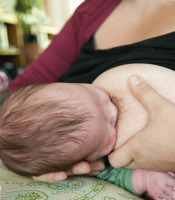
After your baby opens their mouth wide, quickly and gently bring your baby onto your breast. |
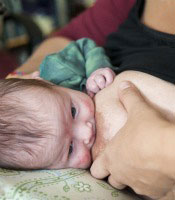
If you're worried about your baby being able to breathe easily, reposition your baby a little. |
Source: Allina Health's Patient Education, Guide for the Care of Children: Ages Birth to 5, sixth edition, ped-ah-91554
Reviewed By: Allina Health's Patient Education Department experts
First Published: 02/01/2010
Last Reviewed: 04/03/2026