
Drivers Assessment and Training outcomes
Driver Assessment and Training
For many people, being able to drive means independence, mobility and a sense of control in our lives. Courage Kenny Rehabilitation Institute’s unique Driver Assessment and Training service includes both assessment and training. It helps new or experienced drivers with visual, cognitive, physical, mental health, medical challenges, or changes due to. Since 1978, Courage Kenny Rehabilitation Institute has been a leader in driver assessment and training for seniors and people with disabilities. Additionally, the service is a licensed driving school in Minnesota.
Everyone must complete a driver assessment before we consider any training. During the three-hour assessment, people participate in an interview, clinical testing to evaluate the critical physical, visual and cognitive skills used while driving, and complete an on-the-road performance in one of the Courage Kenny vehicles. At the end of the assessment, the results are discussed with the person. The results might suggest continuing or returning to driving with or without restrictions, taking driving lessons, stopping driving or other recommendations.
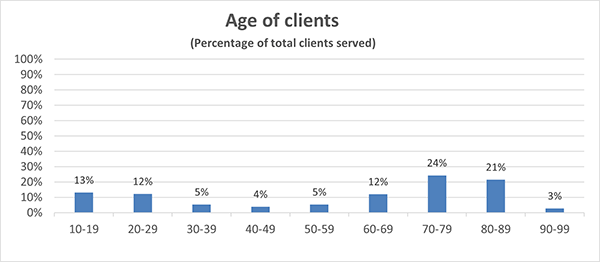
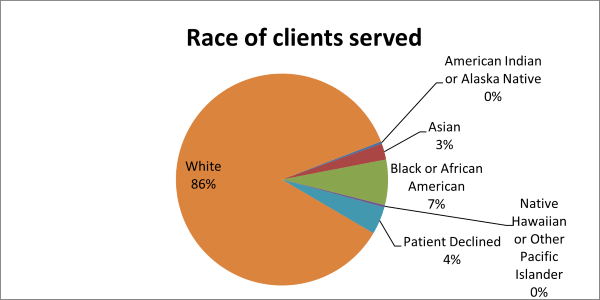
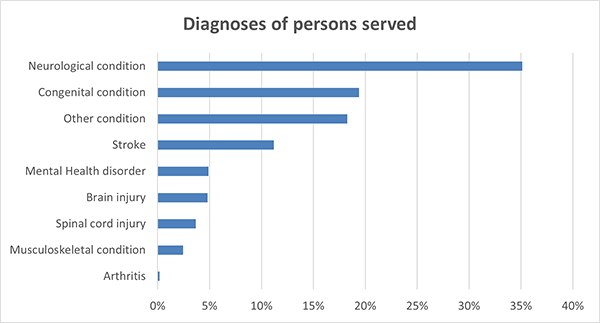
Demographics:
In 2024, there were 1,175 persons seen for driving assessment, training or both.
- Thirty-seven percent of people were female and 60% were male.
- Ninety-eight percent of people spoke English as their primary language, 2% spoke a language other than English
Client Outcomes
Driving lessons
Of the 90 respondents that took lessons, with one of the reasons of the lessons being to prepare them for the MN state road test, 47% had taken the state road test. Of those that had taken the state road test, 95% passed. The 39 clients who passed the state road test are driving a median of five days a week. Fourteen people drive to work or school, 18 drive for health-related activities, 27 drive for social activities, and 24 drive for shopping and groceries.
Adaptive equipment evaluation
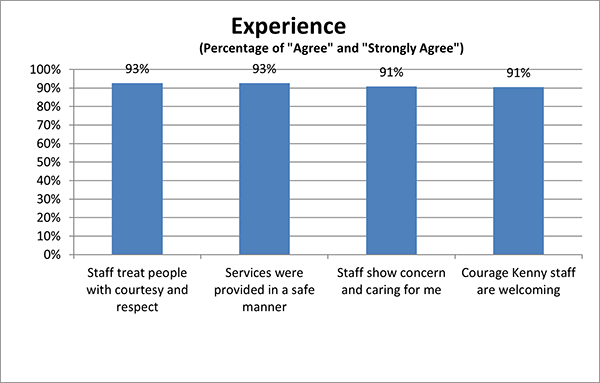
After completing a driving assessment 38 respondents completed driving lessons to further explore their potential to drive using adaptive equipment and received recommendations for adaptive equipment. Thirty respondents who own their own vehicle had adaptive equipment installed, and 96% were “satisfied” or “very satisfied” with their service. Of the 30 who had equipment installed, 93% were driving at the time of the survey a median of four days a week. Nine drive to work or school, 15 drive to health-related appointments, 18 drive to social activities, and 16 drive to grocery and other shopping.
More information
For information about driver assessment and training services or scheduling please go to the Driver Assessment and Training webpage