Creating space for caregivers: A new initiative to support those who support others
Doctors have treated him for throat cancer twice. He has also had tongue cancer, bladder cancer, esophageal cancer, ten oral cancers and about 150 skin cancers.
He has a rare genetic blood disorder called Fanconi anemia. It causes bone marrow failure and makes him 700 times more at risk for cancer than most people. During the bone marrow transplant, every diagnosis, every appointment, every surgery and every hospital visit, Allison is in the background, supporting him every step of the way.
“I've spent the last 14 years in waiting rooms,” said Allison, who, along with her husband, has a daughter in college.
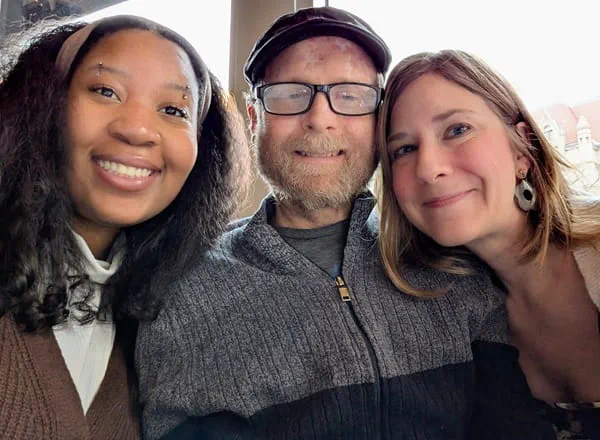
Over the course of those years, Allison said she felt caregivers did not have a safe space to be honest about the toll that caregiving takes on their physical, emotional and mental health. Nearly a quarter of caregivers report difficulty caring for themselves, 64% suffer high emotional stress and 45% report high physical strain, according to National Alliance for Caregiving (NAC) and AARP.
“I remember saying, ‘I’m grateful I can care for my husband, but this can be really challenging.’ And I wondered why no one else was saying that out loud,” Allison shared as she recalled sitting with a group of caregivers who kept the hardest parts to themselves.
Recognizing the need to help caregivers
Allison, who spent her professional career as an educator, teaching children and later coaching teachers on best ways to support reading development, started blogging about her caregiving experience. She began receiving messages from fellow caregivers who felt she captured their experience. She eventually created a nonprofit called The Negative Space.
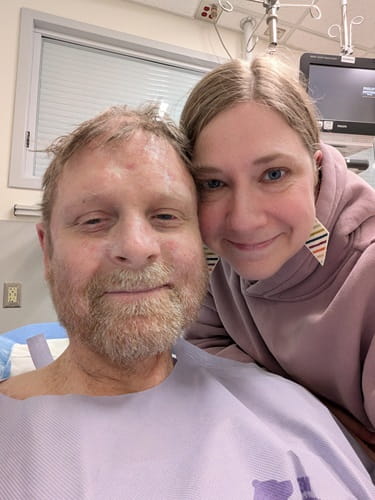
“It’s from the artistic concept of everything that's in the background of the picture is the negative space,” said Allison. “Most of the time, people don’t pay attention to the background, but without it, the entire picture changes. The same thing is true with caregivers, right? As part of the background, we are a big part of the picture; yet people very rarely pay attention to us. If we went away, however, everything would change.”
Creating a resource
Caregiving is not limited to supporting a person receiving cancer treatment or caring for someone who is living with dementia. “It’s providing care to somebody in your life, whether that's emotional, medical, logistical…even remote care,” according to Allison.
In the beginning, The Negative Space provided caregiver gift boxes and focused on providing coaching and education about the needs of caregivers. Over the past four years, resources and outreach have grown.
New initiative
The third Friday of every February is recognized as National Caregivers Day. In addition to setting up displays and celebrating caregivers, The Negative Space is using that day to launch its new initiatives to bring resources to where caregivers often are – medical settings.
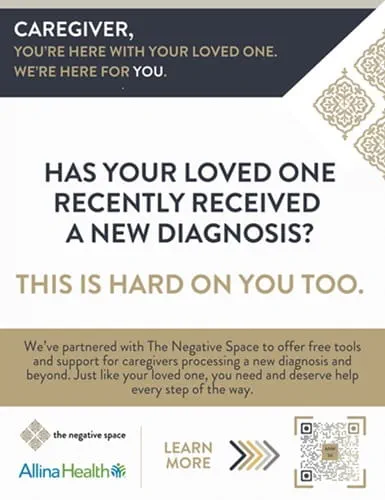
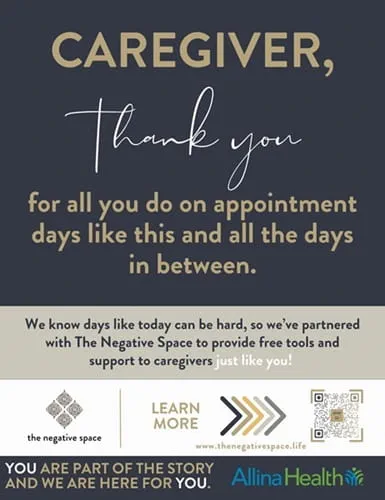
Caregivers waiting for their loved ones at Allina Health Cancer Institute at Abbott Northwestern, United and Mercy hospitals will see signs like this one.
“For them to look up and see a sign that says, ‘Caregivers, we’re here for you too.’ It gives them a moment of recognition. Then, if they scan the QR code, it brings them right to all of these free resources,” shared Allison.
The Negative Space calls its library of resources The Storyline. Caregivers can access meditations they can listen to while waiting on their loved ones; yoga videos they can do from their seat; sign up for virtual support groups and access resources to guide them through issues such as how to support someone who is newly diagnosed and how to juggle working while caregiving. They can also listen to podcasts hosted by Allison, including episodes about time toxicity and death doulas.
“You can get access to all of this from a sign. This is a dream come true,” said Allison. “It has the potential to change the landscape when it comes to how people understand caregiving and the support caregivers need to be healthy, mentally and physically, while supporting their loved one.”

Share this article


