Allina Health first in Minnesota to use new knee implant technology for arthritis pain relief
Allina Health Orthopedics is the first in Minnesota to use a new implant to help people with knee pain caused by osteoarthritis, offering expert innovation and compassionate care to patients.
What is the new implant?
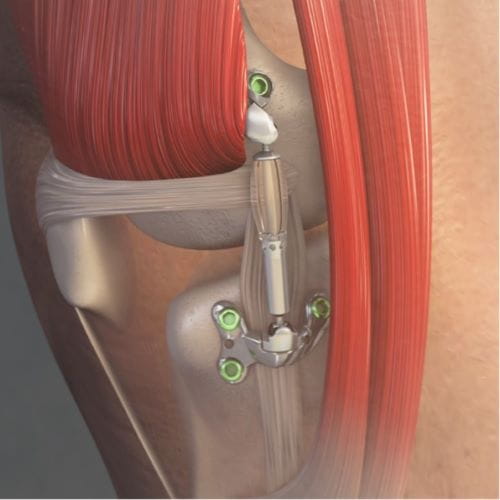
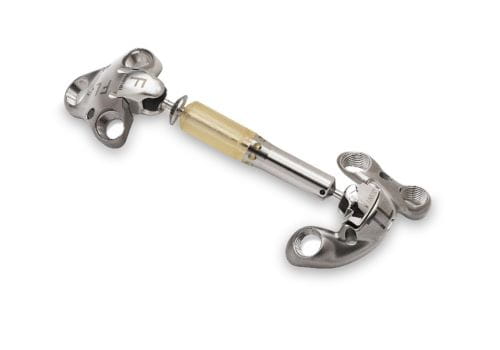
The device is called the MISHA (Medial Implantable Shock Absorber) Knee System, an implantable shock absorber that reduces weight on the knee joint, reduces pain and improves function. This treatment is designed for patients that are getting inadequate relief from non-operative treatments but are not ready for a full knee replacement.
“This device sits outside the joint, over the medial collateral ligament (MCL),” said Ryan Fader, MD, the orthopedic surgeon at Allina Health Orthopedics who completed the first MISHA implant in Minnesota. “It has a flexible, rubber-like material that works like a shock absorber when the knee moves.”
Who can benefit?
Many candidates are usually between 40 and 65 years old, though younger or older patients may qualify and a Medicare procedure code was approved in January 2025. They are often active but feel pain on the inner side of the knee. Many have a damaged meniscus and some cartilage loss, and it is very common to have had prior knee surgery(s).
“They’re in a tough spot,” said Dr. Fader. “They’re in pain, but not quite ready for a full knee replacement. This option gives them a chance to stay active with less pain, and we’re here to guide them every step of the way.”
Other treatments like steroid injections or braces may help for a while, but the pain often comes back. MISHA isn’t a cure for arthritis, and it won’t prevent future knee replacement, but it can offer longer-lasting relief with a personalized approach to care.
How the procedure works
The technology has been around for years, but the U.S. Food and Drug Administration (FDA) authorized it for patient use in 2023. It is an outpatient procedure that preserves the joint – no cutting or removal of bone, cartilage or ligaments.
“We make a small cut on the inner side of the knee,” said Dr. Fader. “The implant sits outside the joint and is held in place with three screws in each bone. The shock absorber moves between them.”
Recovery timeline
Patients start physical therapy within a few days. They go one to two times a week for about three months. Dr. Fader checks in with them at two, six, and 12 weeks after surgery.
“Most people are back to normal between four and six months,” he said. “They’re doing everything they want to do.”
Promising results
Dr. Fader has already seen great results with his first two MISHA patients. One patient was doing single-leg squats just five weeks after surgery.
“This implant helps bridge the gap,” he explained. “If someone is 10 to 12 years away from needing a knee replacement, this can relieve pain and reduce pressure on the damaged part of the knee. That may slow down further damage.”
For more information, go to Orthopedics in Minnesota | Allina Health Orthopedics.

Share this article


