18-year-old stroke survivor: ‘I felt trapped in my own body’

Juliana’s story
The entire ordeal made no sense to anyone at the time, least of all her.
“I honestly did not know what was happening to me. I felt trapped in my own body,” said Juliana as she recalled the moment her attempts to do regular tasks on a morning in May failed.

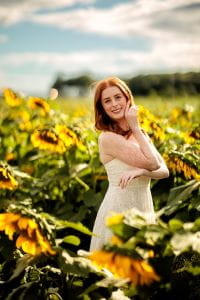
The recent high school graduate is an athlete and a go-getter. She dances competitively, serves as an acrobatic coach to younger girls and at the time, she worked at a nearby elementary school. When she could not speak and seemed unable to complete simple movements like grasping objects, her mother did not waste a second. She immediately drove her to nearby Abbott Northwestern – WestHealth Emergency Department and Urgent Care in Plymouth, Minn.
“I had no idea where we were going when my mom and my brother were driving there,” Juliana remembered. “I was just like, ‘Why can’t I speak?’ I was getting feeling back in my right arm and leg, so I thought whatever happened was passing.”
For Juliana, the experience in the emergency department was a whirlwind of care team members asking her questions, drawing her blood and trying to piece together what was happening.
“I could not comprehend a thing anyone was saying to me, and when I did understand what they were saying, I could not get any words out back to them. So, it was very scary,” added Juliana.
Distinctive clinical care
WestHealth has been designated by the state of Minnesota as an Acute Stroke Ready Hospital, meaning it has the training, medicine and processes in place to assess and treat stroke cases quickly. For Juliana, this proved crucial. While her symptoms were certainly neurologic in origin, they did not scream stroke because of the way the symptoms seemed to increase and decrease, as well as her age and general health.
“She had a sudden onset of neurologic symptoms without another good explanation for her presentation, so I called a stroke code,” explained Kendra Dodd, MD, medical director of Abbott Northwestern – WestHealth Emergency Department and Urgent Care.
A stroke code sets off a chain of events to quickly and adequately care for a patient who may be experiencing a stroke. A CT scan is the first step. Thanks to the use of artificial intelligence (AI), a tool called Rapid AI quickly detected a large vessel occlusion (clot) in Juliana’s imaging and sent a message to the radiologist and neurologist on duty, who promptly alerted Dr. Dodd.
The technology saved the care team crucial diagnostic time.
“Juliana’s blockage was in a large blood vessel. So, potentially this could have been devastating, especially in a young person,” said Dr. Dodd.
Before transferring Juliana to Abbott Northwestern Hospital for surgery to remove the clot, her care team gave her a dose of a clot-busting drug called Tenecteplase or TNK. The medicine is most effective during the first four hours after stroke symptoms appear.
“I rode in the ambulance [to Abbott Northwestern Hospital] with Juliana,” shared Brian Miller, MD, Juliana’s father, a doctor with Allina Health who was seeing patients when he learned of his daughter’s symptoms. “When the paramedics put her in the ambulance, she was still very confused. By the time we got to Abbott Northwestern, I could already tell she was a lot more alert.”
Abbott Northwestern Hospital is a state-designated Comprehensive Stroke Center. It was there, under the care of Allina Health Neuroscience Spine and Pain Institute specialists, that Juliana learned what was happening to her.
“For a while, I actually thought I was dying,” explained Juliana.
Because Juliana received the clot-busting medicine so quickly, the clot was essentially gone by the time the neuro-interventional radiologist went in it to remove it.
Strokes in younger people
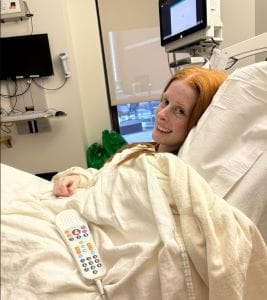
The U.S. Centers for Disease Control and Prevention has reported a steady increase in strokes in younger age groups. Lifestyle choices that lead to conditions such as high blood pressure and diabetes are often the cause. But there are undetected medical issues that can contribute to stroke in people between the ages of 18 and 44. In Juliana’s case, the stroke led her care team to learn she had a small hole in her heart that did not close after birth, called a patent foramen ovale or PFO.
“Oftentimes, people have these PFOs, and they live their whole life without a problem,” said Ganesh Asaithambi, MD, medical director, Allina Health Neuroscience Spine and Pain Institute’s Stroke and Neurology Program. “It’s an unfortunate situation when someone who is otherwise quite healthy can have a clot travel to the brain and cause a blockage.”
BEFAST
No matter the age, BEFAST saves lives when it comes to strokes, and it likely saved Juliana.
- Balance - Sudden difficulty with balance
- Eyes - Sudden problems with vision in one or both eyes
- Face - Droopiness on one side of the face or mouth
- Arms - Sudden weakness in one or more limbs
- Speech - Slurred words or an inability to repeat a simple sentence
- Time - Seek treatment quickly
Thanks to quick intervention and some rehabilitative therapy after her stroke, Juliana has no disabilities or impairments. Because she lives a healthy lifestyle and had surgery to repair the hole in her heart, she should not have to worry about another stroke as she works toward her goal of earning a Bachelor of Fine Arts in dance at the University of Minnesota.

Share this article


